
AI-Driven Supply Chains at Scale
Global supply chains are under pressure. From climate events to labor shortages, companies need faster, more flexible tools to plan and respond.
One of Blue Yonder’s Supply Chain applications, originally built in C++ on Oracle in the 1990s, wasn’t keeping up. It was hard to maintain, slow to scale, and didn’t support modern supply chain complexity or sustainability goals.
At the same time, their customers were asking for:
Better real-time planning
Easier scenario simulations
More sustainable decision-making
Lower operational costs
Blue Yonder needed a smarter, leaner solution—fast.
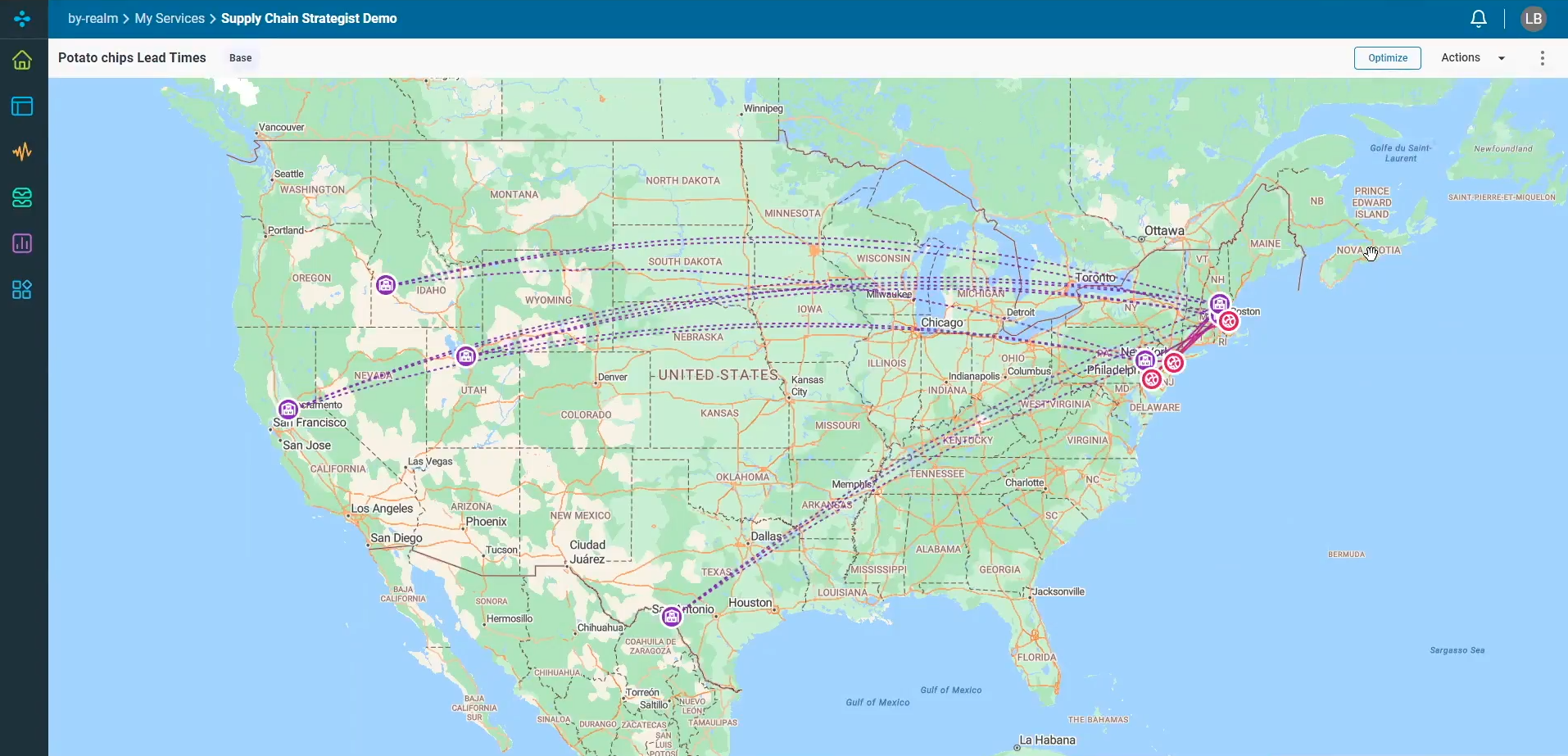
The Solution: A Modern System Built on AI and Graphs
Blue Yonder chose Snowflake and RelationalAI to power the next generation of its platform.
Using graph reasoning, they built a centralized knowledge graph to represent complex supply chain relationships—like product-to-supplier-to-store networks. This made it easier to understand and optimize these relationships with real-world constraints.
They replaced a massive 205,000-line C++ codebase with just 8,500 lines of SQL and rule-based logic, a 20x reduction. The entire system was moved from desktop to cloud-native, running securely within Snowflake.
“The transition to a cloud-native solution has revolutionized our supply chain management capabilities.”
—Amanpreet Singh, CVP, Greenfield Innovations, Blue Yonder
AI Workloads Driving the System
RelationalAI brought multiple layers of intelligence to the new platform:
Prescriptive reasoning to recommend optimal actions
Rule-based reasoning to encode business logic and constraints
Graph reasoning to map and query complex networks
Predictive reasoning to simulate demand and disruption scenarios
This combination enabled what-if analysis. For example, if a snowstorm shut down a warehouse, users could simulate the impact and re-optimize routes instantly—minimizing costs, delays, and stockouts.
“You can see the difference between scenarios side by side—cost, fulfillment, service level. That’s the power of this solution.”
—Amanpreet Singh
The Results: Faster, Leaner, Smarter Supply Chains
✅ 20x smaller codebase
✅ 50% reduction in total cost of ownership
✅ 10x scalability boost
✅ Completed in weeks
✅ Enabled real-time, scenario-based decision-making
“It’s the fastest modernization we’ve ever done—without a single person supporting the old code.”
—Amanpreet Singh
The results didn’t just help Blue Yonder—they helped their customers, who can now balance cost, service levels, and sustainability goals in every supply chain decision.
A Strategic Edge for the Future
CEO Duncan Angove called the knowledge graph approach “perfectly oriented to supply chains,” because “they’re all about relationships—between product, brand, supply, and store.” With AI-powered decision-making built in, Blue Yonder has redefined what modern supply chain platforms can do.
“For agents and language models, this brings critical context and semantic meaning to the data.”
—Duncan Angove, CEO, Blue Yonder
Project Information
Customer
Blue Yonder
Category
Tech, Retail, Supply Chain
Applications
Supply chain network optimization
What-if scenario simulation
Sustainability-driven decision support
Modernization of Supply Chain Strategist (SCS)